
On this page
One of the most common questions we get from new oil-shop and small-factory buyers is some version of: “After I press the oil, do I need a refining machine?” The honest answer is usually no — but it depends entirely on what you sell and to whom. Filtering and refining are two different steps, and confusing them leads buyers to either sell cloudy oil that will not keep, or to overspend on a refining line they do not need. This guide explains the difference, the four classic refining stages, and how to decide which level of processing fits your market.
This guide is part of our hydraulic oil press machine resource hub.
Filtering vs refining: not the same thing
Filtering and refining sit at two different points on the quality ladder, and most buyers only need the first one. Getting this distinction right is the single most important step before you spend money on equipment.
- Filtering removes suspended solids and sediment from freshly pressed oil, leaving it clear and stable. It is a physical clean-up step every press needs, done with a paper-leaf filter.
- Refining is a further chemical and physical process that strips out impurities like phospholipids, free fatty acids and pigments to make a neutral, export-grade oil. It is a separate line, not a filter.
Put simply: every press needs filtering. Only some businesses need refining. Filtered fresh oil is exactly what most fragrant-oil shops sell — and the natural color and aroma are the selling point, not a defect to be refined away.
What refining actually removes
Crude pressed oil is mostly neutral oil (triglycerides) plus a small set of impurities. The goal of refining is not to strip everything out — beneficial components like tocopherols are kept — but to remove the impurities that hurt taste, storage life or appearance. Those fall into three rough groups: mechanical impurities (solids), fat-soluble impurities (free fatty acids, pigments, waxes) and water-soluble impurities (phospholipids, mucilage, some proteins).
The four classic refining stages
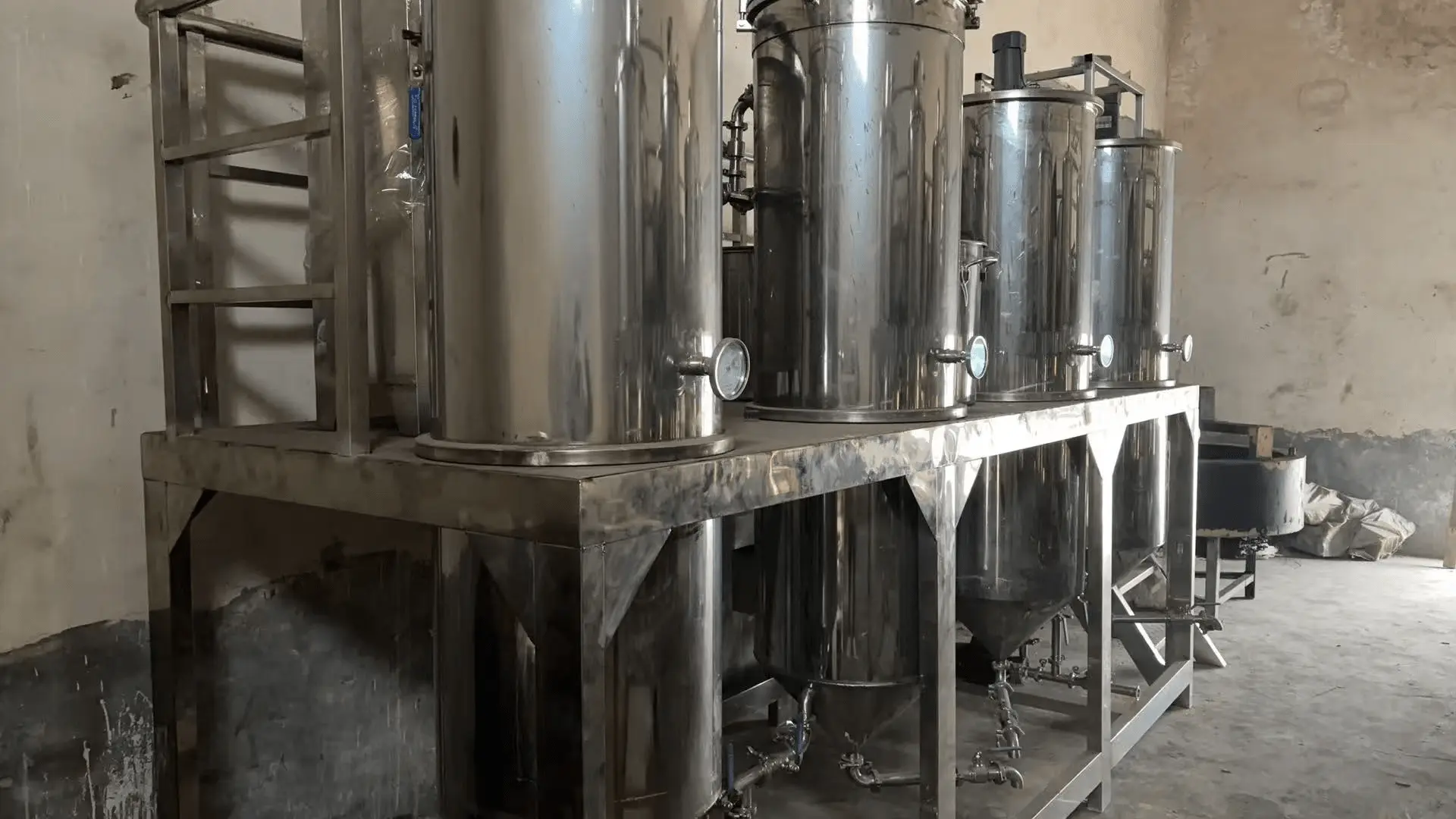
A full refining line runs four core steps in sequence. You do not always need all four; bottled-brand and export buyers usually do, while a workshop polishing its oil may only want the first one or two.
| Stage | What it does | Why it matters |
|---|---|---|
| Degumming | Removes phospholipids and mucilage with heat and water/agents | Makes the oil clearer and more stable; prevents sediment later |
| Deacidifying | Removes free fatty acids by alkali or physical refining | Cuts acidity, improves taste and shelf life |
| Decolorizing | Adsorbs pigments with bleaching earth / activated carbon | Produces the light, clear color bottled brands expect |
| Deodorizing | Steam-strips odor and taste compounds | Gives a neutral oil for blended/commodity products |
Which level do you actually need?
The right level of processing follows the market you sell into, not the machine you can afford. Clarity and neutrality requirements rise as you move from a walk-in shop toward export, so match the step to the buyer.
| Your market | Processing needed | Why |
|---|---|---|
| Walk-in fresh-oil shop | Filter only | Natural color and aroma are the selling point; crude character is what customers come for |
| Bottled / supermarket brand | Filter + partial refining | Buyers expect clear, light, stable oil with a long shelf life |
| Export / commodity blending | Filter + full refining | Must meet neutral color, low acidity and export quality standards |
| Industrial / non-food oils | Depends on spec | Driven by the downstream process, not by taste |
Do not over-buy a refining line
A refining line is a real investment in equipment, chemicals, operator skill and space. If your business is fresh, fragrant oil sold locally, a refining line will strip out the very character your customers pay for — and tie up cash you could put into pressing capacity or filtration. Start by filtering well. Add refining only when a specific customer or channel requires it, and size that line to the volume you can actually sell as refined product.
Tell us what you press and who you sell to, and we will tell you honestly whether you need filtering only, partial refining, or a full line — and which size fits your real output instead of overbuilding.
Related Reads
- Filtering Pressed Oil: How to Choose Oil Filtration Equipment for Your Press
- Hydraulic Oil Press Wear Parts & Maintenance Schedule: What to Stock and When to Replace
- Hydraulic Oil Press Machine 300 & 325: The Hot-Press Workhorse Models Explained
- How to Choose a Cold-Press Hydraulic Oil Press: Models 355 to 500
FAQ
Is filtered oil the same as refined oil?
No. Filtering removes suspended solids and sediment so the oil is clear and stable. Refining is a further chemical and physical process that removes free fatty acids, phospholipids and pigments for a neutral, export-grade oil. Many shops sell well-filtered oil and never refine.
Do I need a refining machine for a fresh-oil shop?
Usually not. Walk-in customers buy fresh-pressed oil for its natural color and aroma, which refining would strip away. A good paper-leaf filter is normally all a fresh-oil shop needs.
When does refining become worth it?
When you sell into bottled-brand, supermarket or export channels that require clear, neutral, long-shelf-life oil to a set standard. At that point, size the refining line to the volume you can actually sell as refined product.
What are the four refining stages?
Degumming (removes phospholipids and mucilage), deacidifying (removes free fatty acids), decolorizing (removes pigments) and deodorizing (steam-strips odor and taste). You do not always need all four.
Does refining remove the healthy parts of the oil?
Good refining targets harmful and undesirable impurities while keeping beneficial components such as tocopherols. The aim is a cleaner, more stable oil, not a stripped one — but heavy processing does reduce the raw character that premium cold-pressed buyers value.
Project planning
Configure the right oil press and production line
Send your oilseed, target output, bottle or packaging requirements, power supply, and destination country. We will match the machine, supporting equipment, and line layout.