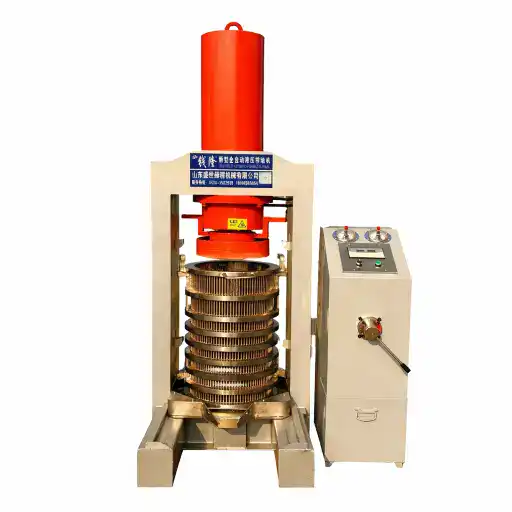
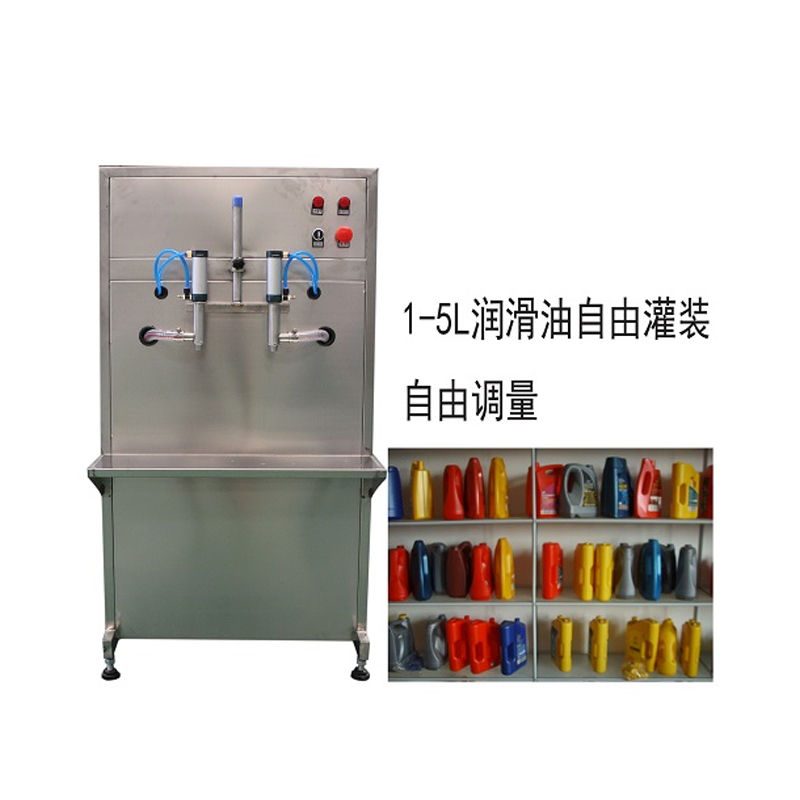
Semi-automatic piston filler
Dose viscous and semi-viscous products into small containers
The SSHC-SAPF uses a piston cylinder and pneumatic control to draw and discharge a defined liquid volume. The source lists separate 100-1000 mL, 500-2000 mL, and customizable 1000-5000 mL configurations for oils, sauces, detergents, chemicals, and other compatible products.
Filler selection
Choose piston displacement for viscous small-package filling
This machine has its own range, utilities, and output reference. Do not apply its data to weighing or flow-meter fillers.
Small or viscous packages
Use this piston machine when product behavior and the selected piston range suit the bottle and target volume.
Current machineMedium jugs and pails
Use the two-head weighing filler where net mass and medium-container handling are the main requirements.
View weighing filling →Free-flowing edible oil
Consider the gear flow-meter filler for pumpable liquids after meter and temperature compatibility are confirmed.
View flow-meter filling →100-200 kg drums
Use the separate single-head drum weighing machine for the published barrel mass range.
View drum filling →Operating sequence
Draw a fixed charge, then discharge it into the container
The source describes piston injection, electronic sensor control, and dual-speed filling. The final stroke, speed, and nozzle settings must be validated with the actual product and package.
Application boundary
Match viscosity, particles, seals, and nozzle to the product
- Source-listed products: edible oil, sauces and seasonings, detergents, daily chemicals, alcohol, beverages, viscous liquids, and semi-liquid materials.
- Product behavior: provide viscosity and temperature range, particles or fibers, foaming, separation, and air sensitivity.
- Package: provide bottle material, target volume, opening, height, shape, stability, cap, and sample containers.
- Product contact: verify cylinder, piston seal, valves, hoses, nozzles, and metal surfaces for food, chemical, and cleaning compatibility.
- Process limit: beverage listing does not establish suitability for carbonated, sterile, hot-fill, or aseptic applications.
Select one validated piston range
The public specification lists three bands rather than one universal cylinder: 100-1000 mL, 500-2000 mL, and 1000-5000 mL, with the last identified as customizable. Confirm the selected band, target products, and every bottle size in the quotation.
Source-hosted machine video
Review nozzle access and the semi-automatic operator cycle
The demonstration shows the machine in operation, but the source does not identify the liquid, viscosity, fill volume, temperature, cycle time, or measured tolerance. Confirm performance through a sample test and agreed acceptance method.
- Check bottle positioning and clearance below each nozzle.
- Review product pickup, cylinder stroke, discharge, and end-of-fill behavior.
- Confirm whether dual-speed settings control splash or foam for the actual product.
- Plan capping, labeling, coding, and container transfer after filling.
Visible source details
Inspect the liquid path and pneumatic components
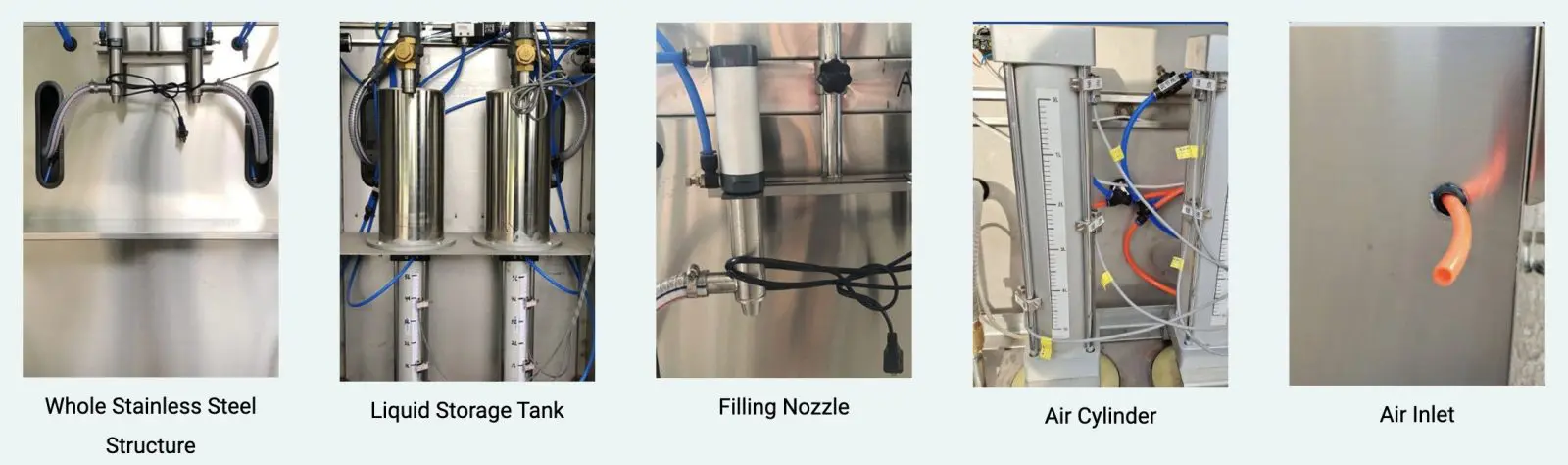
The hosted detail image labels the stainless structure, liquid storage tank assembly, filling nozzle, air cylinders, and air inlet on the pictured configuration. It does not identify the stainless grade, seal materials, hose specification, or hygienic finish.
- Confirm every product-contact material and replacement seal.
- Check cylinder access for draining, disassembly, and cleaning.
- Match nozzle diameter and valve design to product and bottle opening.
- Confirm air preparation, isolation, connection, and exhaust arrangement.
Published reference data
SSHC-SAPF source-listed specification
Capacity and accuracy test conditions are incomplete. Product, piston range, fill size, temperature, operator method, and acceptance procedure must be fixed before performance is evaluated.
| Parameter | Source-listed value | Confirmation required |
|---|---|---|
| Model | SSHC-SAPF | Confirm selected piston range and final machine configuration. |
| Capacity | 200-300 bottles/hour, based on 5 L | Liquid, viscosity, operator method, and test conditions are not published. |
| Range option 1 | 100-1000 mL | Confirm minimum practical fill with the actual product and package. |
| Range option 2 | 500-2000 mL | Confirm the chosen cylinder and changeover requirements. |
| Range option 3 | 1000-5000 mL, customizable | Confirm final stroke, cylinder, and target bottle set. |
| Filling accuracy | ±0.5% | The percentage basis, target, calibration method, and test conditions are not stated. |
| Voltage | 220 V AC | Frequency, phase, installed power, plug, and protection are not published. |
| Air pressure | 0.8 MPa | Confirm air quality, regulator, connection, and site pressure stability. |
| Air consumption | ≥ 0.25 m³/min | Confirm compressor capacity and the configured machine demand. |
Source-listed configuration
Piston dosing with pneumatic and sensor control
- Piston cylinder system
- Pneumatic control system
- Electronic sensor control
- Dual-speed filling mechanism
- Linear filling structure
- Centralized operator controls
Missing public data
Close specification gaps before ordering
- Number and size of piston cylinders and filling nozzles
- Installed electrical power and electrical frequency
- Machine dimensions, weight, and working height
- Product-contact grades, seal compounds, hoses, and surface finish
- Product feed arrangement, hopper or suction connection, and usable hold-up volume
- Included spares, tools, manuals, and cleaning accessories
Line integration
Coordinate product feed, bottle handling, and compressed air
- Define whether product is gravity-fed, drawn from a vessel, or transferred by an auxiliary system.
- Keep viscosity and temperature within the validated operating window.
- Provide dry, clean compressed air at the required pressure and flow.
- Confirm bottle staging, filled-container transfer, capping, labeling, and coding.
- Plan drip collection, product recovery, drainage, and batch changeover.
Food use requires a documented hygienic configuration
Listing edible oil, sauce, seasoning, alcohol, or beverage applications does not by itself establish food-contact compliance. Confirm wetted materials, seals, lubricants, cleanability, drainage, local standards, and the required product-safety documentation.
Maintenance planning
Focus on seals, cylinders, valves, and clean product flow
- Inspect piston seals, cylinder surfaces, product valves, nozzles, hoses, and clamps on a planned schedule.
- Drain and clean the product path with a method compatible with the filled material and seal compounds.
- Check pneumatic filters, regulators, tubing, cylinders, sensors, and exhaust condition.
- Verify filling results after changing seals, stroke settings, product, temperature, or bottle size.
- Order spare seals, valves, sensors, cylinder parts, and air components against the final bill of materials.
Safe operation and service
Guard cylinder and nozzle movement, keep hands clear of pinch points, and isolate electrical and compressed-air energy before cleaning or service. Product-specific controls may also be required for hot, flammable, reactive, allergenic, or food materials.
Quotation checklist
Send samples and data for piston-range selection
Related equipment
Compare the small-package filler with the wider line
Test the piston configuration with your real product and bottle
Send product samples and properties, all target volumes, container drawings, required output, allowable deviation, utilities, and cleaning requirements.