
On this page
- The short answer: pressure, held over time
- The pressing cycle, step by step
- The key parts and what each one does
- How the pressure is controlled
- MPa, tonnage and surface pressure — what scales with what
- Why the hydraulic principle suits premium oil
- Which hydraulic oil press fits your project
- Related Reads
- FAQ
Buyers comparing oil presses online run into a wall of tonnage numbers and MPa figures, but almost none of it explains the one thing that decides oil quality and yield: how the machine actually presses. A hydraulic oil press is not a faster screw press — it works on a completely different principle. Understanding that principle is what stops buyers from over-paying for tonnage they will never use, or under-buying a press that cannot hold pressure long enough to drain the cake. This guide walks through how a hydraulic oil press works, part by part, and why that design suits premium cold-pressed and fragrant hot-pressed oils.
The short answer: pressure, held over time
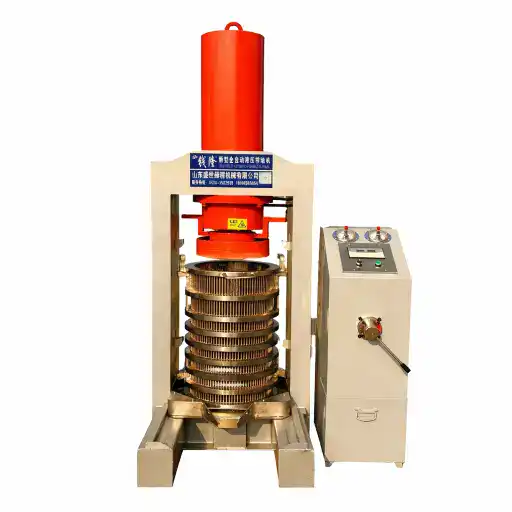
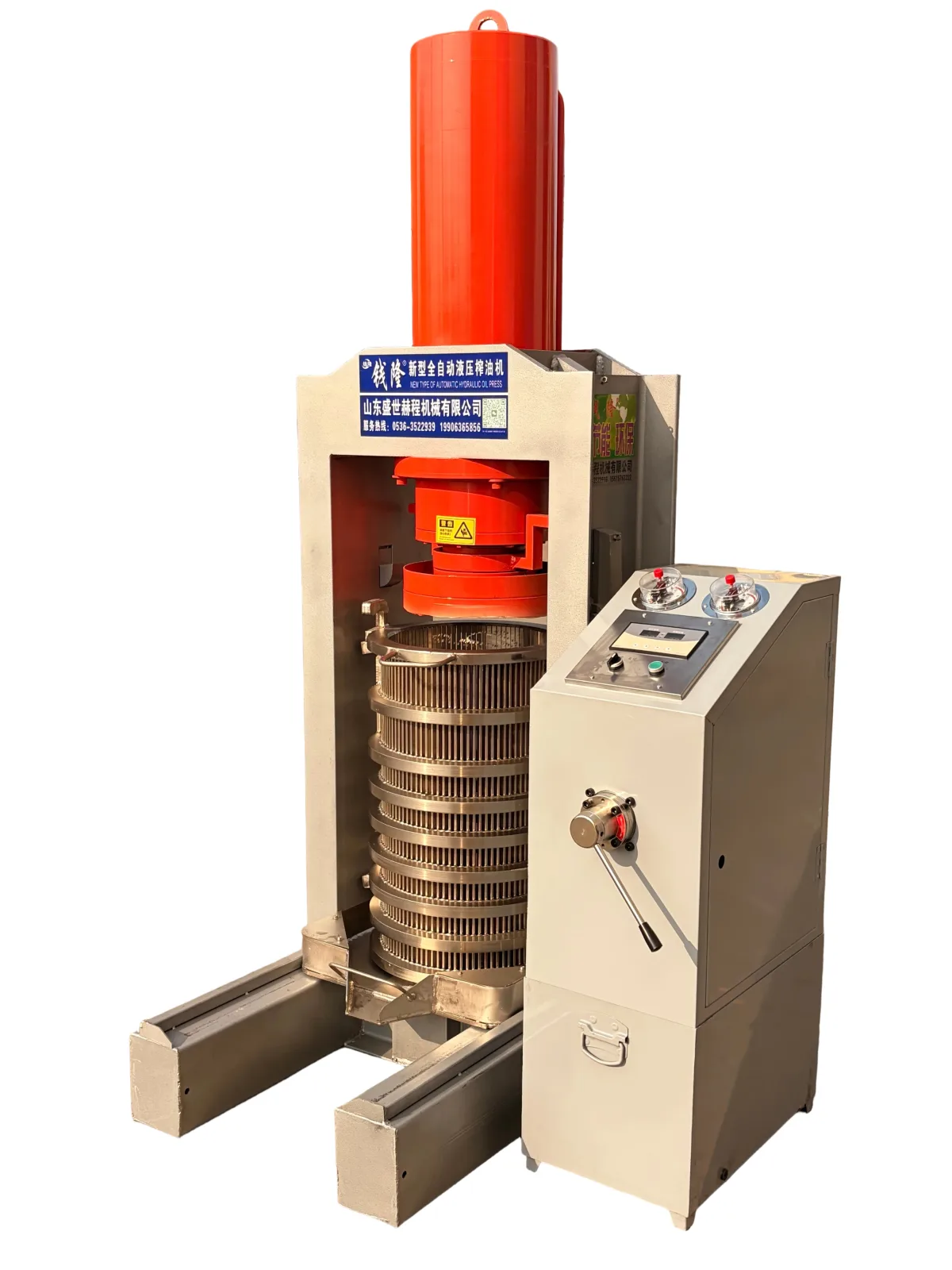
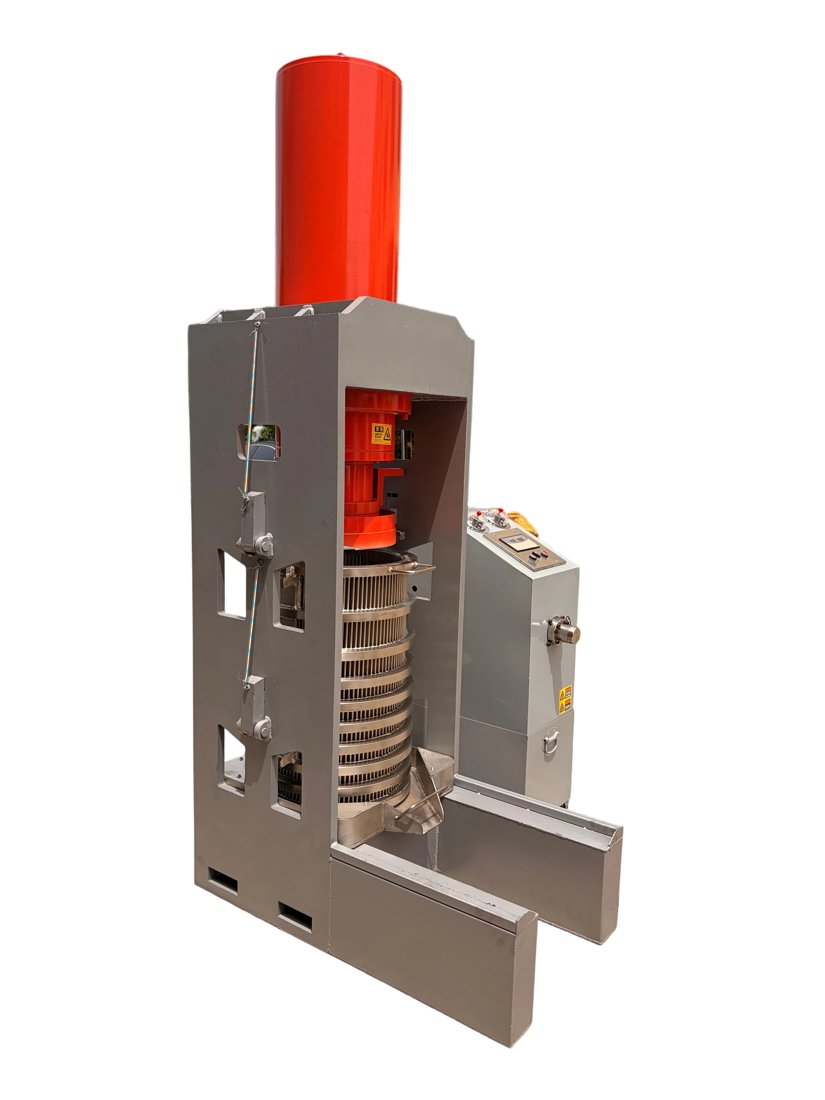
A hydraulic oil press extracts oil by squeezing oilseeds inside a closed barrel with a hydraulic cylinder, then holding that pressure while the oil drains out. Unlike a screw press, which works continuously, a hydraulic press works in batches: load, press, hold, release, unload. The slow build and long hold are exactly what give the oil its clarity and keep pressing temperature low. The whole machine exists to do one thing well — apply very high force evenly to a cake and keep it there long enough for the oil to escape.
The pressing cycle, step by step
- Load the barrel. Prepared seed (crushed, and for hot pressing, heated) is loaded into the pressing barrel in layers separated by steel plates.
- Build pressure. The hydraulic pump drives oil into the cylinder; the cylinder pushes the ram up into the barrel, compressing the cake. Pressure rises to the working level — around 60 MPa on the hydraulic system.
- Hold. Pressure is held steady. This is where the oil actually drains; rushing it is the most common cause of low yield. Cold pressing holds for about two hours, hot pressing for 30–40 minutes.
- Release. Pressure is released slowly through the relief valve. The ram retracts.
- Unload. The pressed cake is removed and the steel separator plates are cleaned for the next batch.
The number buyers should care about is not the headline tonnage but how long the press can hold full pressure. A press that bleeds off pressure during the hold leaves oil in the cake no matter how high its tonnage rating.
The key parts and what each one does
| Part | What it does | What buyers should know |
|---|---|---|
| Hydraulic pump & cylinder | Generate force and drive the ram | The cylinder, not a screw, is the source of all pressing force |
| Ram | Pushes up into the barrel to compress the cake | Oil weeping around the ram signals worn cylinder seals |
| Pressing barrel | Holds the seed cake under pressure | 390 mm standard barrel for most seeds; 300 mm for sesame |
| Carbon-steel separator plates | Separate cake layers so oil drains evenly | Reusable steel hardware — not a fabric consumable; inspect for scoring and flatness |
| High/low-pressure relief valve | Governs pressing and return strokes, caps the pressure | A mechanical, non-electric valve; check it relieves at the right pressure |
| Two pressure gauges | Read the combined pump and the cylinder | Their needles should always match — a gap is an early warning |
How the pressure is controlled
This is where the build quality of a press shows, and where cheaper or generic machines get it wrong. On our presses, pressure is governed by a mechanical high/low-pressure relief valve, not a solenoid or electric valve. It is non-electric, simple to check, and one less thing to fail in a dusty workshop. The valve caps the system at its working pressure and handles the switch between the high- and low-pressure stages of the stroke.
The press also carries two pressure gauges by design, not one: one reads the high/low combined pump, the other reads the cylinder directly. In normal operation their needles move together. When they disagree, you have an early warning — a sticking gauge, a valve issue, or a seal starting to pass — and a built-in backup if one fails. Treat the matching needles as a free daily diagnostic.
MPa, tonnage and surface pressure — what scales with what
The single biggest source of buyer confusion. The hydraulic system runs at about 60 MPa on every model — that figure does not change as you move up the range. What scales is the total pressing force (tonnage) and the pressure on the cake surface, because larger cylinders turn the same 60 MPa into more force.
| Model | Press type | Total force | System pressure |
|---|---|---|---|
| 300 | Hot press | 300 tons | ~60 MPa |
| 325 | Hot press | 325 tons | ~60 MPa |
| 355 | Cold press | 370 tons | ~60 MPa |
| 400 | Cold press | 410 tons | ~60 MPa |
| 426 | Cold press | 500 tons | ~60 MPa |
| 480 | Cold press | 600 tons | ~60 MPa |
| 500 | Cold press | 630 tons | ~60 MPa |
Why the hydraulic principle suits premium oil
Because force comes from a cylinder rather than a turning screw, there is no friction heat building up in the press. The seed is compressed slowly at a temperature you control, which is exactly what cold pressing needs to preserve flavor, color and nutrients. The same machine handles hot pressing simply by heating the seed before loading — the press itself does not add heat. That control is why hydraulic presses are the standard for sesame, walnut, almond and other high-value oils rather than for bulk commodity output.
Which hydraulic oil press fits your project
Now that the principle is clear, the choice comes down to scale and seed. Start with the model guide that matches yours:
- Korean-type small press (KHOP 10/15/20 kg) — shops and fresh-oil retail
- 300 & 325 hot-press models — the workshop workhorses
- Cold-press models 355 to 500 (370–630 ton) — premium batch production
- See the full hydraulic oil press machine hub for the complete range and specs
Tell us your seed, your batch size and whether you hot press or cold press, and we will match the right model and barrel to your project instead of selling you tonnage you do not need.
Related Reads
- How to Read Oil Press Pressure Specs: MPa, Tonnage & Cake Surface Pressure
- Hydraulic Oil Press vs Screw Oil Press: Which Is Better for Your Oil Business?
- Hydraulic Oil Press Wear Parts & Maintenance Schedule
- Why Is My Oil Yield Dropping? A Diagnostic Checklist
FAQ
How does a hydraulic oil press work in simple terms?
It squeezes oilseeds inside a closed barrel with a hydraulic cylinder and holds that pressure — around 60 MPa on the system — while the oil drains out. It works in batches: load, press, hold, release, unload. The long hold is what drains the cake and protects yield.
What separates the cake layers — steel plates or cloth?
Our presses use reusable carbon-steel separator plates between cake layers, not fabric cloths. The plates are inspected for wear and flatness rather than replaced as a consumable, which lowers running cost over the life of the machine.
Why does a hydraulic oil press have two pressure gauges?
One gauge reads the combined pump and the other reads the cylinder. Their needles should always match; when they do not, you get an early warning of a gauge, valve or seal problem, and the second gauge is a built-in backup if one fails.
Does a higher MPa number mean a stronger press?
No. The hydraulic system runs at about 60 MPa on every model. What changes across the range is total force (tonnage) and cake surface pressure, because a larger cylinder turns the same 60 MPa into more force. Compare tonnage and barrel size, not the system MPa.
Is the pressure controlled electrically?
No. Pressure is governed by a mechanical high/low-pressure relief valve, not an electric or solenoid valve. It is non-electric and simple to check, which makes it reliable in dusty workshop conditions.
Project planning
Configure the right oil press and production line
Send your oilseed, target output, bottle or packaging requirements, power supply, and destination country. We will match the machine, supporting equipment, and line layout.